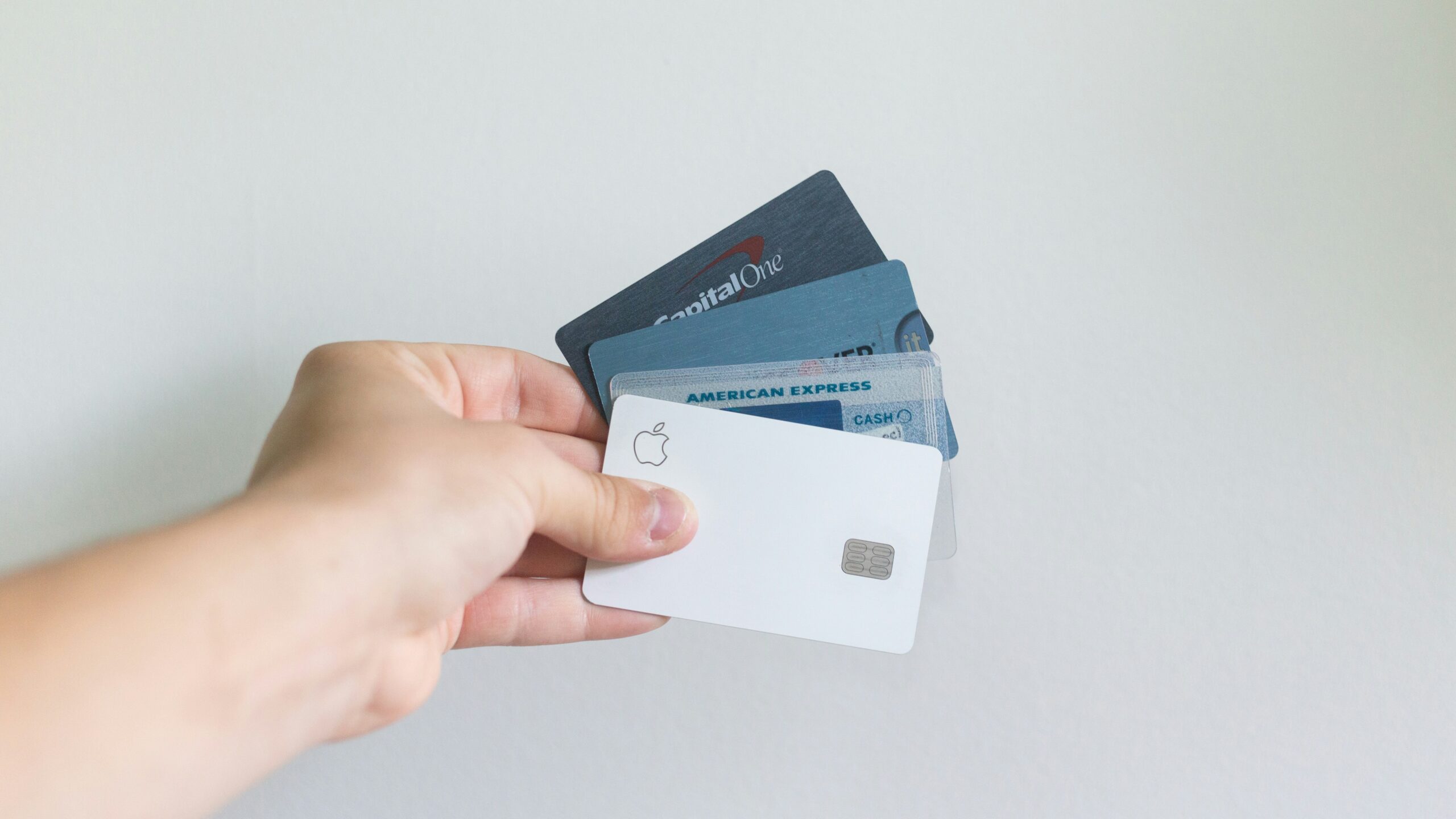
Store Credit Cards Worth Getting (And the Ones to Skip)
Tax season just wrapped up, and whether you’re staring at a refund or just breathing a sigh of relief that it’s over, this time of year has a way of making us think about money differently. How we spend it. How we save it. And — if you’re like me — how you wish you’d started building credit a little smarter, a little sooner.
I started with an Old Navy card in my twenties. Not because I had a grand financial plan, but because I was standing at the register and someone asked if I wanted 20% off my purchase. Reader, I said yes.
That card — and a few that followed — ended up being one of the smarter financial moves I made without really meaning to. Store credit cards have a reputation for being traps, and they can be. But used carefully, they’re also one of the most accessible ways to start building credit history, especially when traditional bank cards feel out of reach.
Here’s what I’ve learned after years of using them — and the ones I think are actually worth having in your wallet right now.
💳 First: A Quick Word on How This Works
Store credit cards tend to have lower approval requirements than general-purpose bank cards, which is why they’re often a realistic first step for someone with limited or no credit history. When you use the card and pay your bill on time every month, that activity gets reported to the major credit bureaus — and that’s how your credit score grows.
The catch? Store cards often carry high interest rates. The strategy that works is simple: use the card only for purchases you were already going to make, and pay the balance in full every single month. If you carry a balance, the interest charges will quickly eat up any rewards you earned. The card stops being a tool and starts being a debt.
With that said — here are the ones worth considering.
🛍️ The Store Cards Worth Having
1. Target Circle Card — Best for Everyday Families
If you shop at Target regularly, this card is a no-brainer. You get 5% off immediately at checkout instead of earning rewards to redeem later — which is instant gratification rather than delayed rewards. You also get free two-day shipping on Target.com orders and an extended 30-day return window.
The bonus: Target Circle Card holders pay a discounted rate for Target Circle 360 membership, which includes same-day delivery from Target and 100+ partner retailers including Sephora, Ulta, CVS, and Petco.
This was one of my early cards and it still lives in my wallet. The 5% adds up fast, especially on grocery and household runs.
Who it’s for: Anyone who shops at Target consistently and can commit to paying the balance monthly.
2. The Gap Inc. Encore Card (Old Navy, Gap, Banana Republic, Athleta) — Best for Apparel Families
This one is personally meaningful to me — my credit journey started with an Old Navy card. And in good news: Gap Inc. just launched a brand new loyalty program called Encore in February 2026, which brings Old Navy, Gap, Banana Republic, and Athleta all under one card and one rewards program.
The Encore Mastercard rewards Gap Inc. purchases at 5X points and apparel purchases from other brands at 3X points. There’s no annual fee, and points can be redeemed for Disney gift cards, AMC theater tickets, and limited-edition collectibles — not just store credit.
If you shop across any of the Gap Inc. brands regularly, upgrading to the Encore card is worth doing. And if you’re starting out, the Old Navy version is one of the more beginner-friendly approvals out there.
Who it’s for: Families who rotate through Old Navy and Gap for kids’ and adults’ clothing throughout the year.
3. Amazon Prime Visa — Best for Online Shoppers
The Amazon Prime Visa earns unlimited 5% back at Amazon.com, Amazon Fresh, Whole Foods Market, and on Chase Travel purchases with an eligible Prime membership. If you’re already paying for Prime, this card essentially makes every Amazon purchase 5% cheaper — which, given how much most of us order, adds up to real money over a year.
It’s issued by Chase, reports to all three credit bureaus, and has no annual fee beyond the Prime membership you likely already have. This one sits more in the “rewards” category than “starter card” territory — Chase typically wants to see some existing credit history — but it’s a natural graduation from a store card.
Who it’s for: Prime members who order from Amazon regularly and have built some credit history already.
4. Ulta Beauty Rewards Mastercard — Best for Beauty Shoppers
The Ulta Beauty Rewards Mastercard gives 20% off your first Ulta purchase after approval and 500 welcome bonus points — worth $17.50 off a future purchase — when you spend $500 on non-Ulta purchases in the first 90 days. It layers on top of Ulta’s existing loyalty program, so you’re stacking points two ways on every beauty purchase.
If you’re spending $50–$100 a month at Ulta on skincare, haircare, or makeup, the rewards can be genuinely significant.
Who it’s for: Regular Ulta shoppers who are already enrolled in the loyalty program and want to accelerate their point earning.
5. Southwest Rapid Rewards Card — Best for Travelers
This is where my credit journey eventually landed, and it changed how I travel. The Southwest Plus card is the entry-level Southwest card — $99 annual fee, which is low for an airline card — and it punches well above its price.
You earn 2X points on Southwest purchases and 2X points at grocery stores and restaurants (on the first $8,000 in combined purchases per year), plus 1X on everything else. You and up to 8 passengers on the same reservation get your first checked bag free — which at Southwest’s current rate of $45 per bag pays for almost the entire annual fee on a single round trip. You also get Group 5 boarding, a complimentary Standard seat selection within 48 hours of departure, and 25% back on in-flight purchases.
The biggest draw is the Companion Pass. Southwest cardholders get a 10,000-point boost each year that counts toward it, which effectively reduces the points needed to earn the Pass from 135,000 to 125,000. The Companion Pass lets someone fly with you on every Southwest flight for just the cost of taxes ($5.60 each way on domestic flights) — for up to two years. It’s one of the best travel perks in the industry.
This isn’t a starter card — you’ll want some established credit before applying. But for anyone who flies Southwest even occasionally, it’s absolutely worth working toward.
Who it’s for: Southwest flyers who want a low annual fee entry point into travel rewards and are working toward the Companion Pass.
⚠️ Cards to Be Careful With
Not every store card is worth the application. A few things to watch for:
Annual fees. Many store cards have no annual fee, which makes them easy to keep open long-term — and a long open account is good for your credit score. But some co-branded cards (like the Southwest Plus at $99/year) do carry annual fees. Before applying, do the math: will you realistically use the card enough to get more value than the fee costs? If the free checked bag saves you $90 on one round trip, a $99 fee is nearly a wash. If you fly once every two years, it’s not.
Deferred interest offers. Some store cards (Best Buy is a common example) advertise “no interest if paid in full” promotions — but if you don’t pay the full balance before the promotional period ends, you get charged interest on the original purchase amount retroactively. This is very different from a 0% APR card from a bank, which only charges interest on whatever balance remains. Read the fine print carefully.
Very high APRs. Store cards routinely carry APRs of 25–30%. This is manageable if you pay in full monthly. It becomes a serious problem if you carry a balance.
Applying for too many at once. Each application triggers a hard inquiry on your credit report, which can temporarily lower your score. Space out applications and only apply for cards you genuinely plan to use.
📈 How to Use Store Cards to Build Credit (The Way That Actually Works)
The approach that worked for me:
Start with one card at a store you already shop at regularly. Use it for purchases you’d make anyway — not as an excuse to spend more. Set up autopay for the full statement balance so you never accidentally carry a balance. Check your credit score every few months (most card issuers now provide this for free). Once you see your score improving, you have more options.
The goal isn’t to collect store cards. It’s to use one or two strategically to build a track record, then graduate to cards with better rewards and lower rates over time. If you’re smart about it, it’s a totally achievable goal!
Disclaimer: This post is for informational and entertainment purposes only and does not constitute financial or credit advice. Credit card terms, APRs, rewards programs, and approval requirements change frequently — always verify current terms directly with the card issuer before applying. We are not financial advisors. Please consult a qualified financial professional for advice tailored to your personal situation.
Disclosure: This post contains affiliate links. As an Amazon Associate, we earn from qualifying purchases at no extra cost to you.